
Springville Foundation Pros
Piering and Underpinning in Springville, UT
Piering and underpinning in Springville, UT: steel push piers, helical piers, and underpinning brackets to stop foundation settlement. Free estimates.
- 15+ Years local experience
- 500+ Projects completed
- Licensed & Insured
Serving Springville and nearby communities.
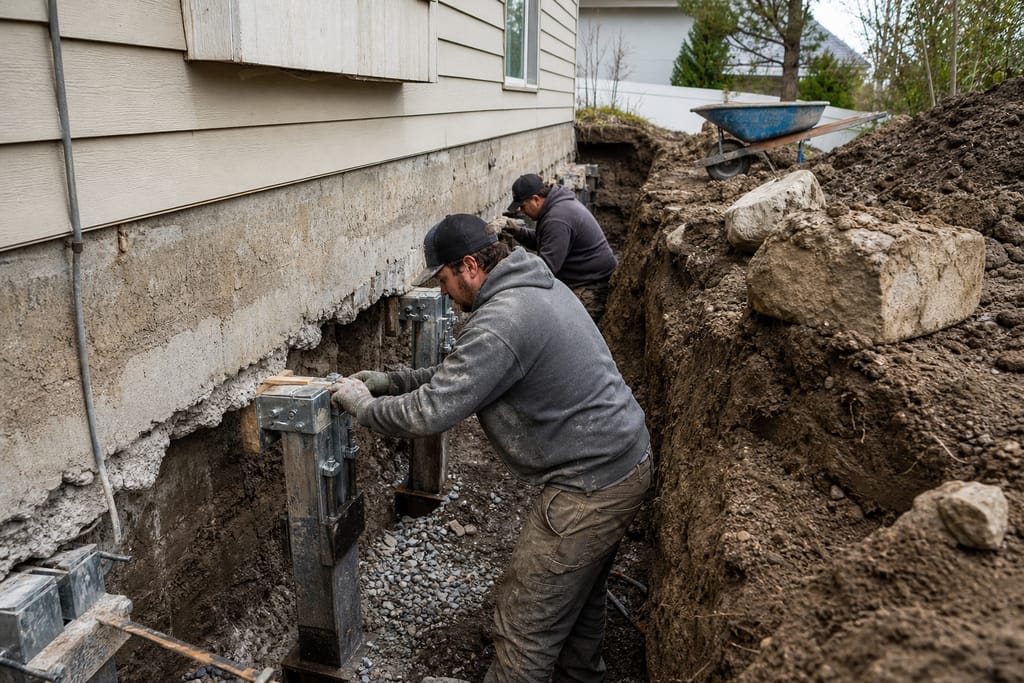
Piering drives steel posts down to load-bearing soil or bedrock. Underpinning extends a footing's support depth. Both stop a foundation from sinking further, and both get specified based on how deep stable soil sits under your home, not a one-size catalog answer. If a corner is dropping, a slab is cracking diagonally, or a door hasn't closed right in months, this is usually the fix.
Springville's housing stock runs from mid-century basement homes to newer subdivisions, and both settle, just for different reasons. Older footings were often poured shallower than current practice calls for, while newer homes can settle as backfill compacts over the first several years. Springville Foundation Pros evaluates soil depth and load before recommending push piers, helical piers, or underpinning brackets, not before.
What's included
What's included
Typically included Optional Customer prep
- Structural and soil assessment to confirm settlement pattern and depth to stable strata
- Pier or underpinning method selection matched to load and access
- Installation, load transfer, and leveling adjustment
- Site backfill and grade restoration
- Interior crack sealing on walls affected by the same settlement
- Drainage work if water contributed to the soil movement
- Clear access around the foundation perimeter where piers will be installed
- Move vehicles or stored items away from excavation points
Want a clearer scope?
Get a Free EstimateHow it works
How our Piering and Underpinning process works
 Step 1
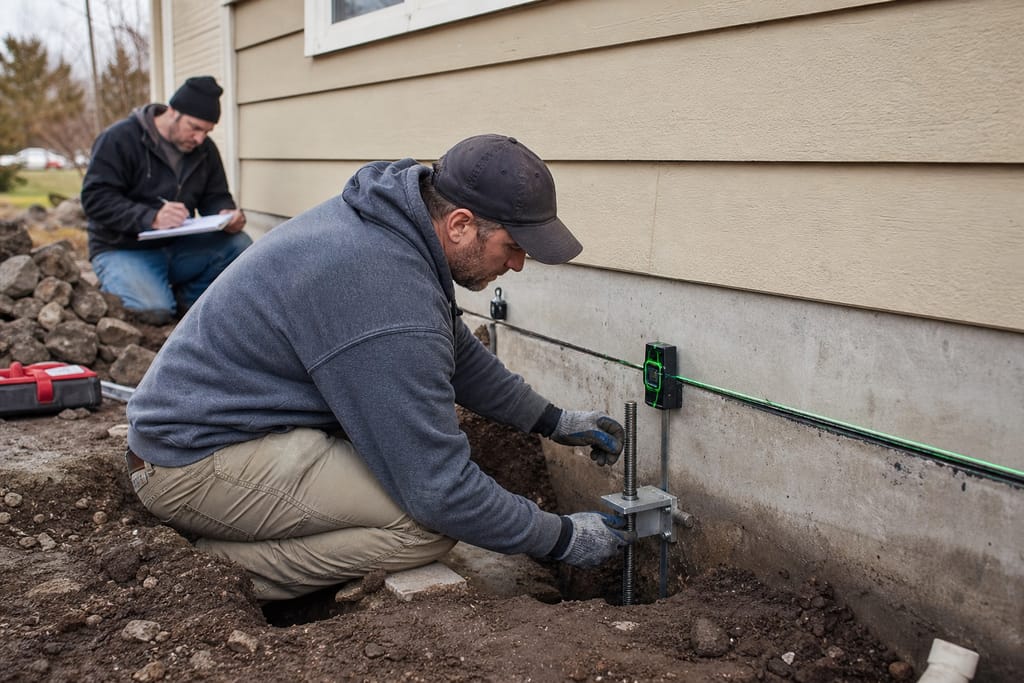
Load Assessment
We map weight distribution across the foundation to set pier spacing.
 Step 2
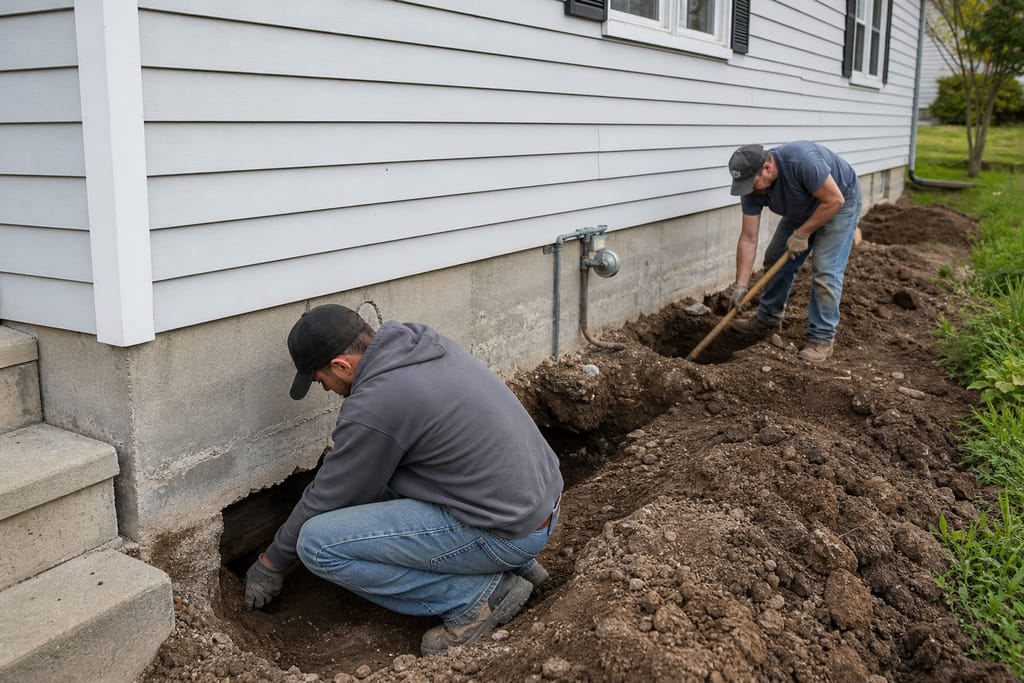
Access Excavation
Small excavation points open along the perimeter where piers are needed.
 Step 3
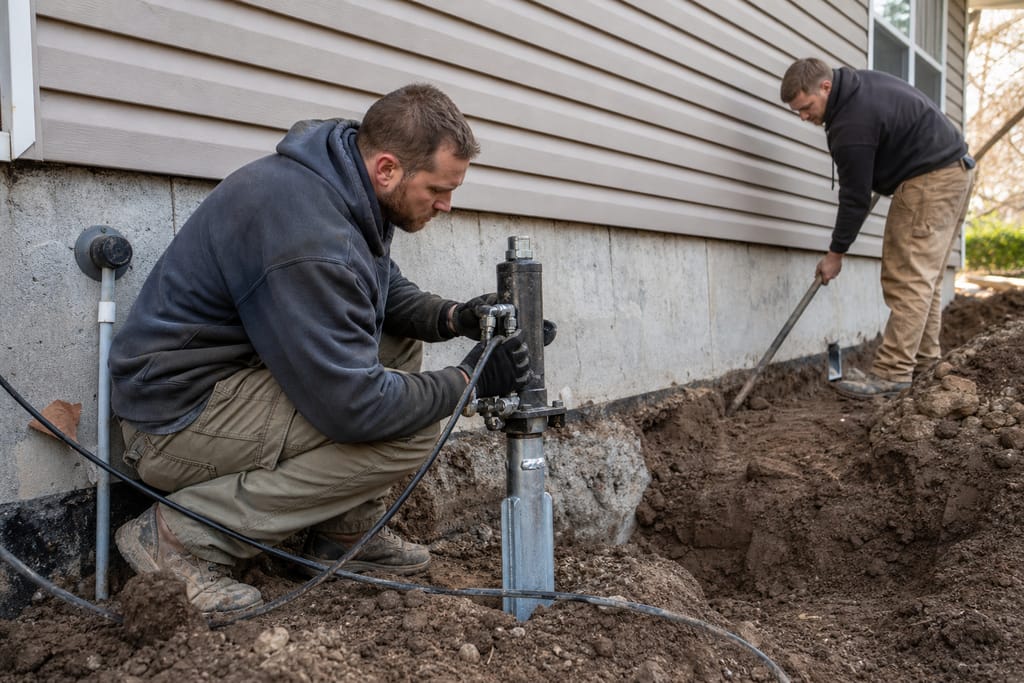
Pier Driving
Piers go in until they hit stable soil or rock below Springville's clay-heavy fill.
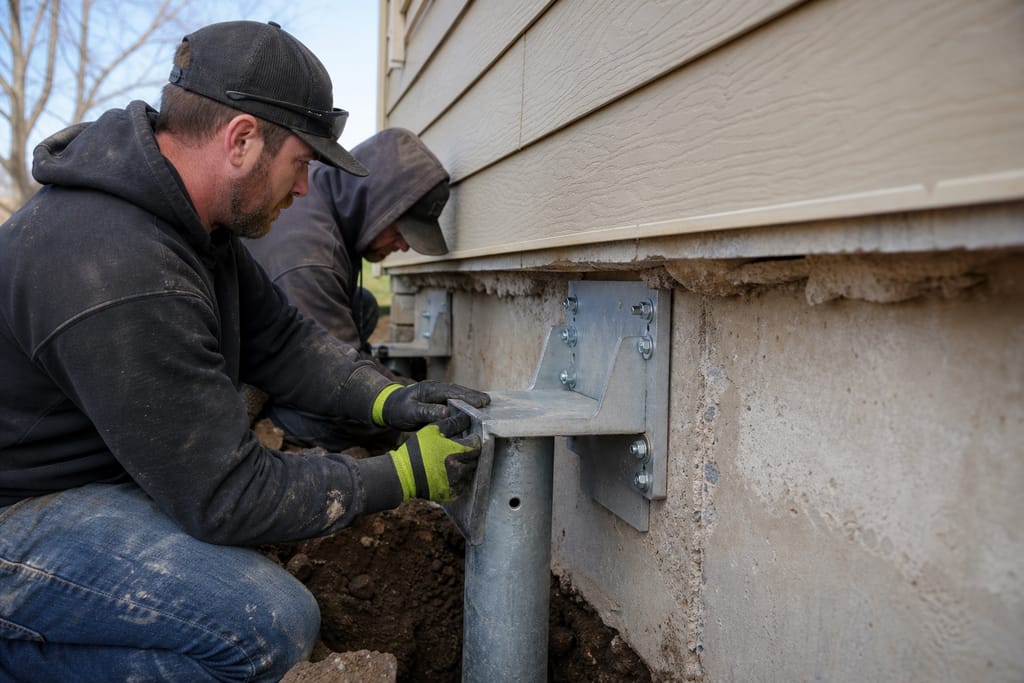 Step 4
Load Transfer
Brackets tie piers to the footing so the structure's weight shifts onto them.
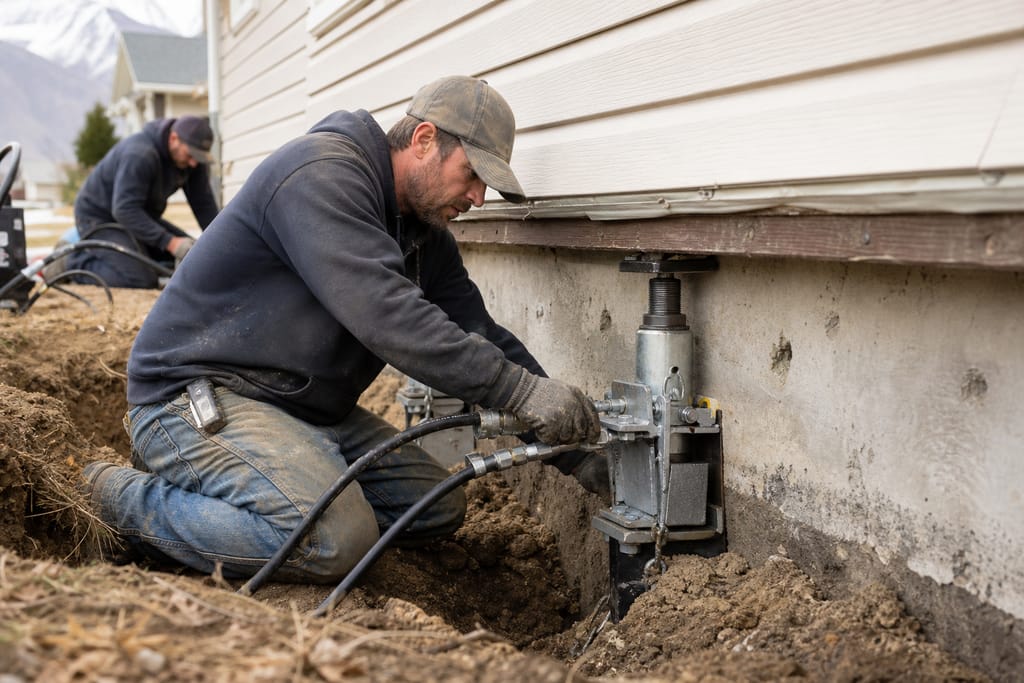 Step 5
Leveling Adjustment
Hydraulic jacks raise the foundation back toward its original elevation.
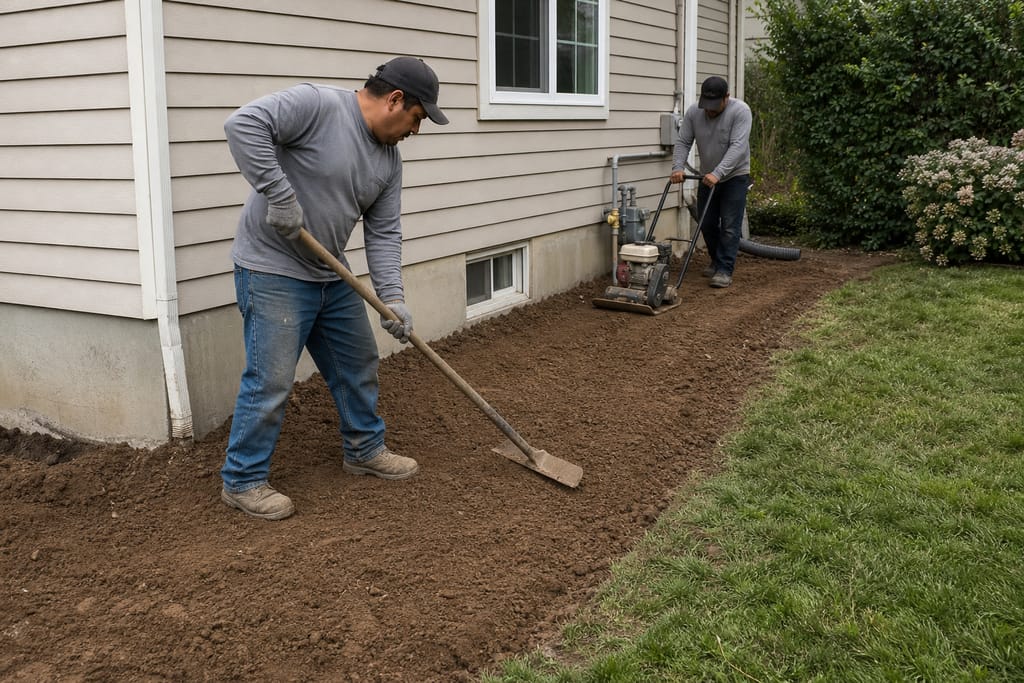 Step 6
Site Restoration
Excavated areas get backfilled and compacted to match the yard's original grade.
Materials
Materials and methods for Piering and Underpinning
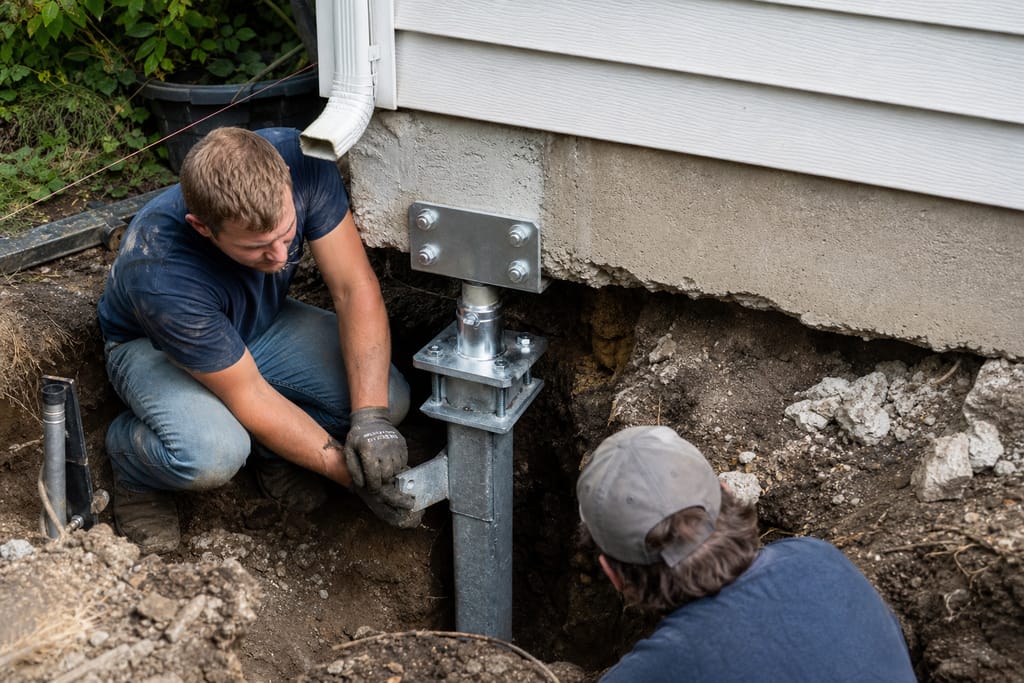
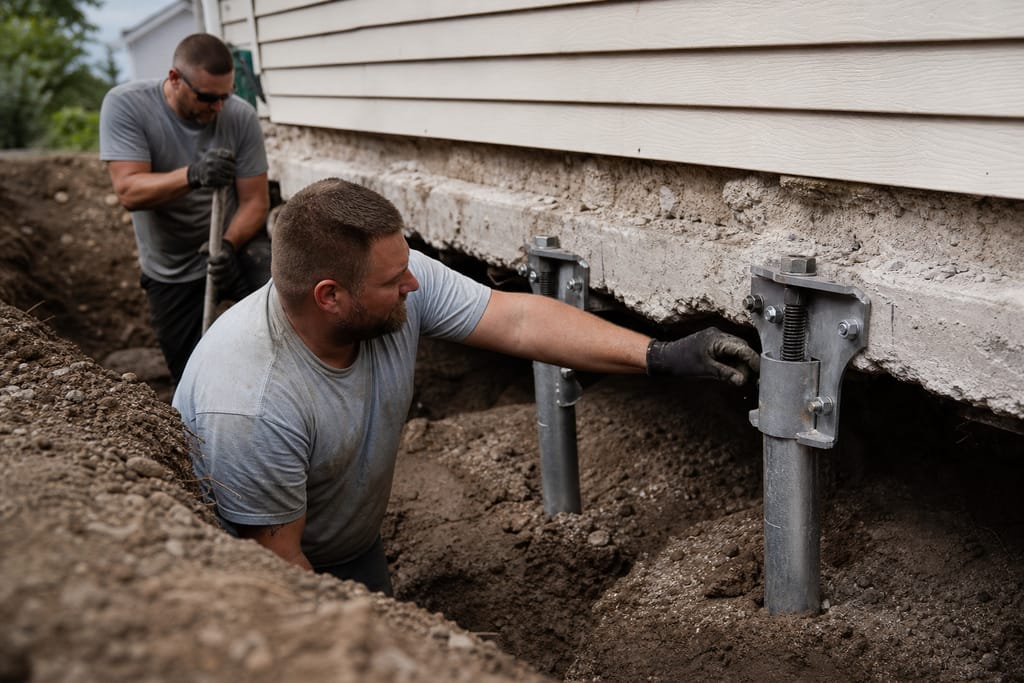
Steel Push Piers
Driven hydraulically to bedrock or dense soil. Carries heavier loads common in full-basement homes.
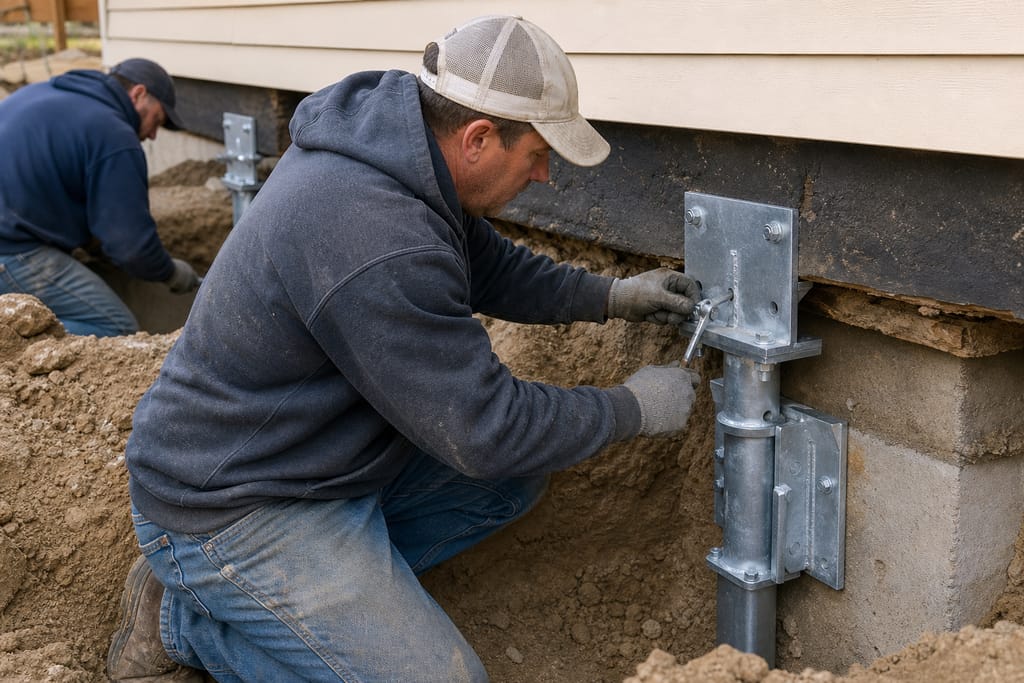
Helical Piers
Screwed into the ground. Works well where soil layers are mixed or softer, a common pattern along the Wasatch Front bench.
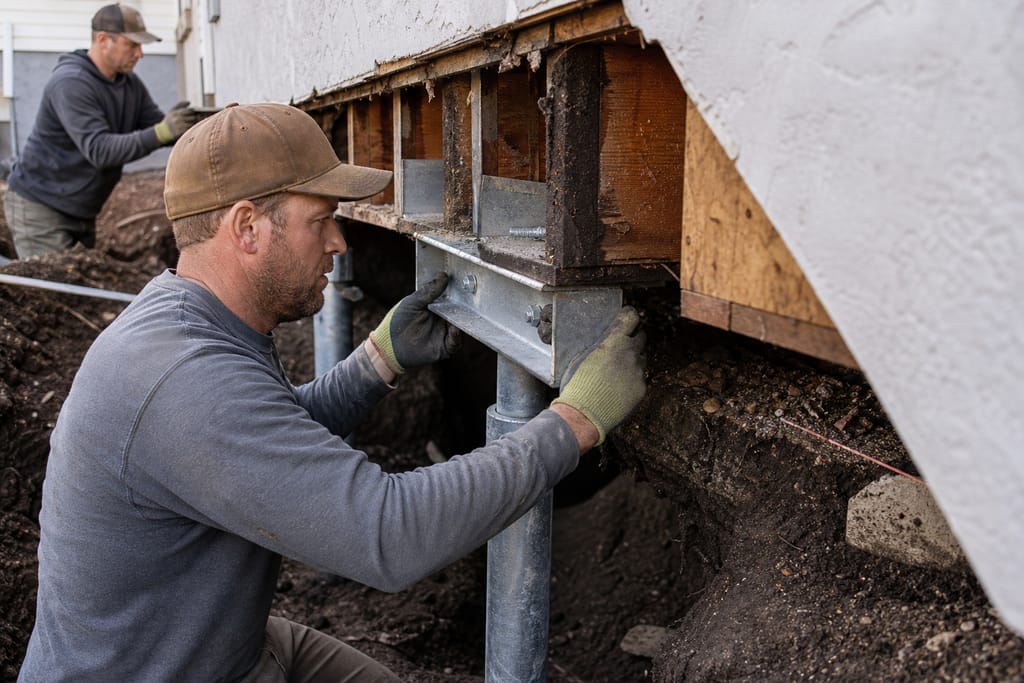
Underpinning Brackets
Connect piers to the existing footing so load transfers evenly instead of concentrating on one point.
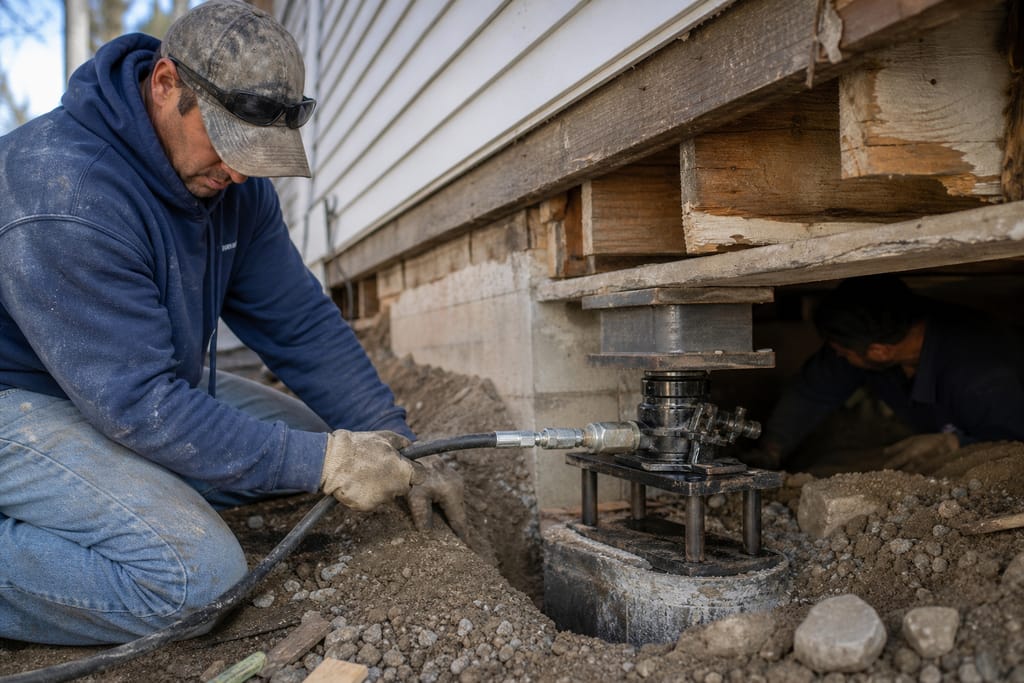
Hydraulic Lift Systems
Control the lift in small increments so the structure rises without new stress cracks forming.
Galvanized Coatings
Protect steel piers from corrosion through decades of freeze-thaw moisture cycling in the soil.
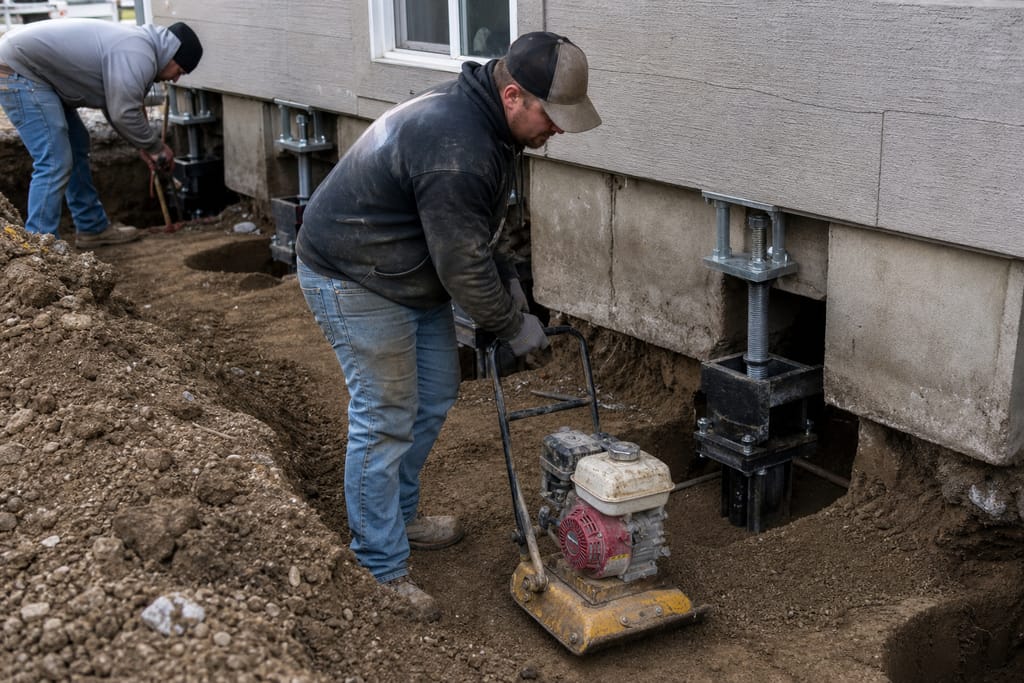
Compacted Fill Material
Packed back around piers to stabilize the surrounding soil after installation.
Questions on materials?
Get a Free EstimateTimeline
How long does a Piering and Underpinning take?
Most piering jobs run a few days start to finish, with timing driven by how many piers the load calculation calls for.
- 01
Consult and inspection
same day - 02
Estimate and pier plan
1–2 days - 03
Pier installation
1–3 daysdepending on pier count
- 04
Backfill and cleanup
same dayas final step
Need a schedule that fits?
Get a Free EstimateBefore & after
Before and after Piering and Underpinning
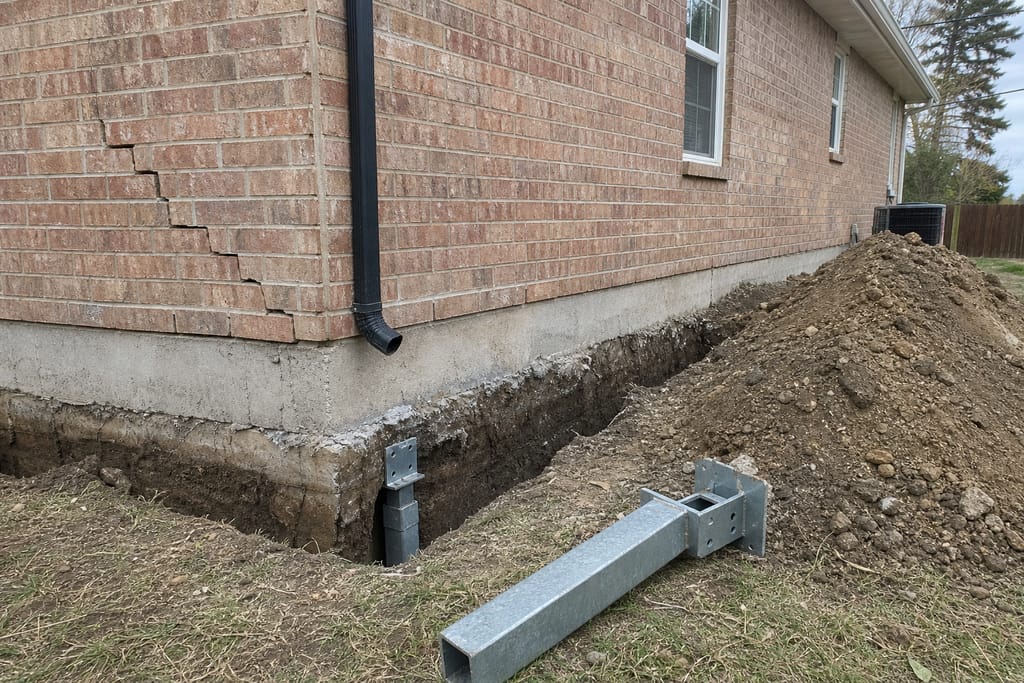
Before 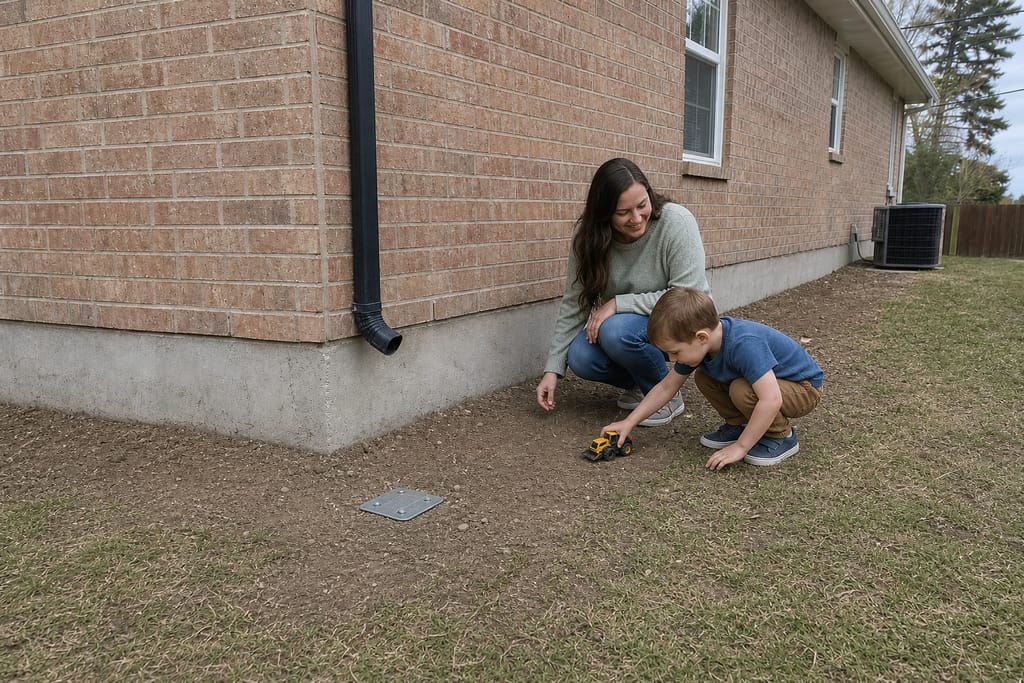
After
FAQs
Piering and Underpinning FAQs
What's the difference between underpinning and piering?
Piering drives individual steel posts to stable soil or rock to carry structural load. Underpinning extends or reinforces the existing footing itself. Often a repair plan uses piering as the method to achieve underpinning's goal, so the terms get used together.
How do I know if I need piering instead of just crack repair?
If cracks are diagonal, stair-stepped, or paired with a sinking corner or sticking door, the foundation itself is moving and needs structural support, not just a sealed crack.
How much does piering cost in Springville?
Cost scales with the number of piers and depth needed to reach stable soil. A written estimate after an on-site inspection is the only accurate way to get a number for your home.
How long do steel piers last?
Galvanized steel piers are built for decades of service. It's not something a homeowner needs to plan on replacing.
Will piering stop my foundation from settling further?
Once piers reach load-bearing soil and the structure's weight transfers onto them, further settlement at that point stops. Other parts of the foundation not addressed can still move independently.
Do I need a permit for piering work?
Structural piering typically requires a permit since it changes how the foundation carries load. We handle permit filing as part of the project.
Next step
Get a Piering and Underpinning estimate in Springville
Call +1 (385) 327-7069 or request a free estimate. We'll inspect the settlement pattern and tell you straight whether piering, underpinning, or both are the right call.
More services
Other Foundation Repair services
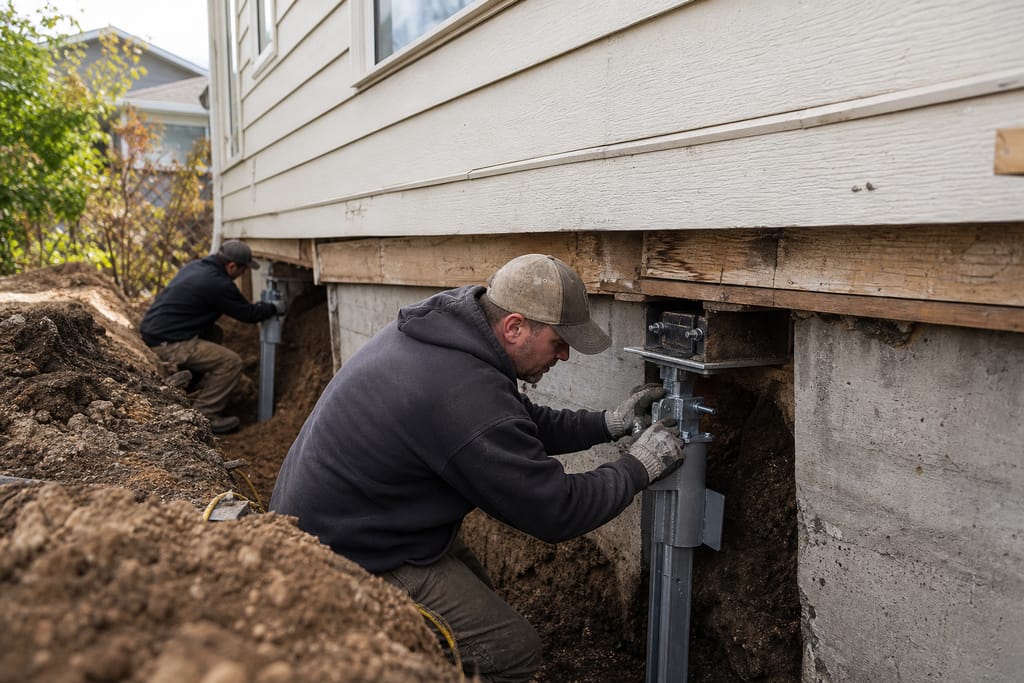
Foundation Repair
Foundation repair in Springville with piering, crack injection, and wall stabilization. Free estimates, written scope before work starts.
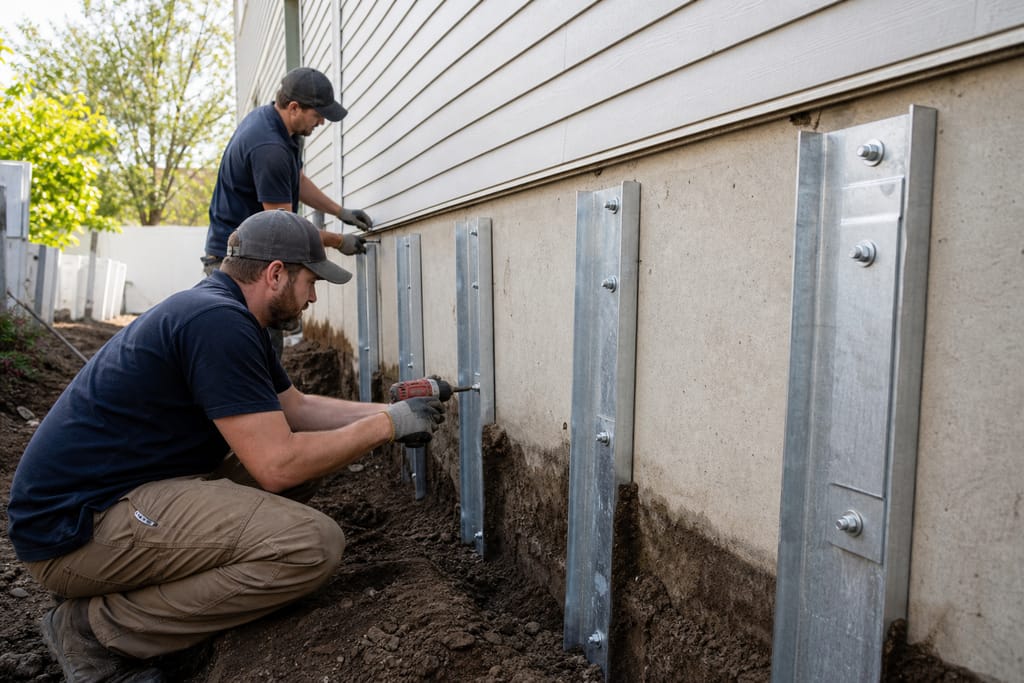
Wall Stabilization
Wall stabilization in Springville, UT: steel anchors, carbon fiber straps, and I-beam bracing to stop bowing basement walls. Free estimates.
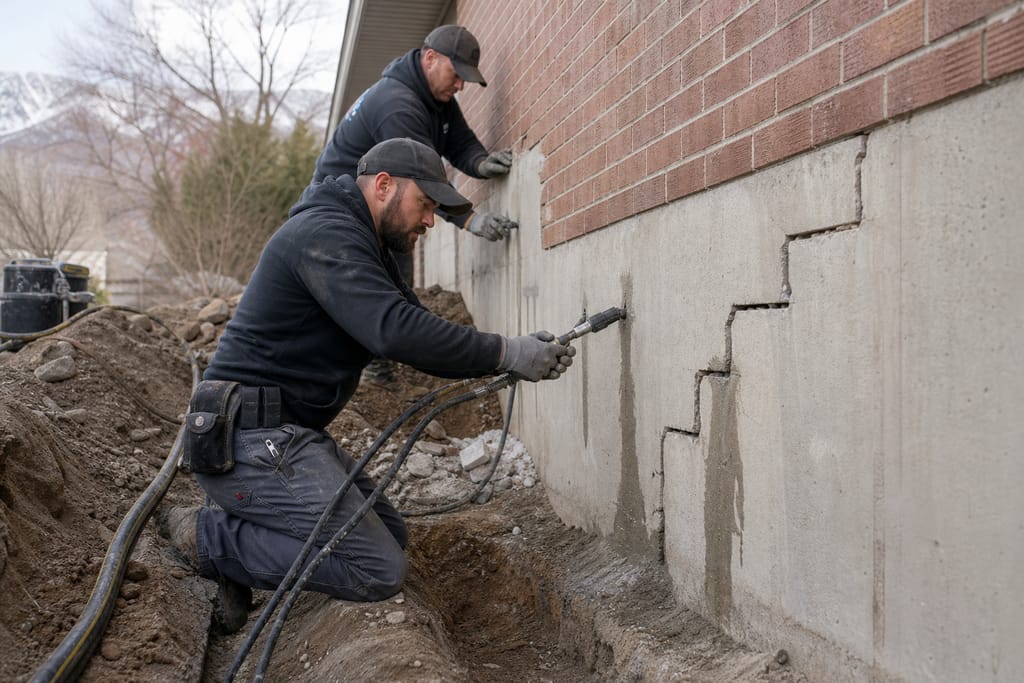
Foundation Crack Repair
Foundation crack repair in Springville, UT: epoxy and polyurethane injection to seal structural and water-entry cracks. Free estimates.
Ask about Piering and Underpinning
Tell us about the project and how to reach you.